Tuesday, 12 June 2012

Available Sustainable Elements


I- Innovative Idea to produce Sulfur, Diesel, Helium, Graphene, and Electricity.

My experiment on the Rugosa corals is showing the possibility of producing
Sulfur, Diesel, Helium, Graphene, and Electricity.
This technique is simple, easy, secure and clean.
The process is cost effective and highly competitive because no energy is used. The expenses are very low presented on seawater, corals, electrical wires, and rolled copper.

A simple prototype to produce Sulfur, Helium, Graphene, Diesel, and Electricity 

Ingredians for the experiment:
- Six rugosa corals.
- A 1.5 liters of sea water.
- A Round plastic container of 2 liters.
- 250 gm of roll copper 16SWG (1.60 mm).
- A 30 cm of electrical wire for general purpose.
- Two Bolts with nuts (4 cm long).
- One metal plate of 4 cm with two holes on the sides


Six Rugosa can produce 6 to 8 grams of sulfur, a 1 liter of diesel and liquid Helium, 2 to 4 mm of Graphene, and electrical energy every 15 days.
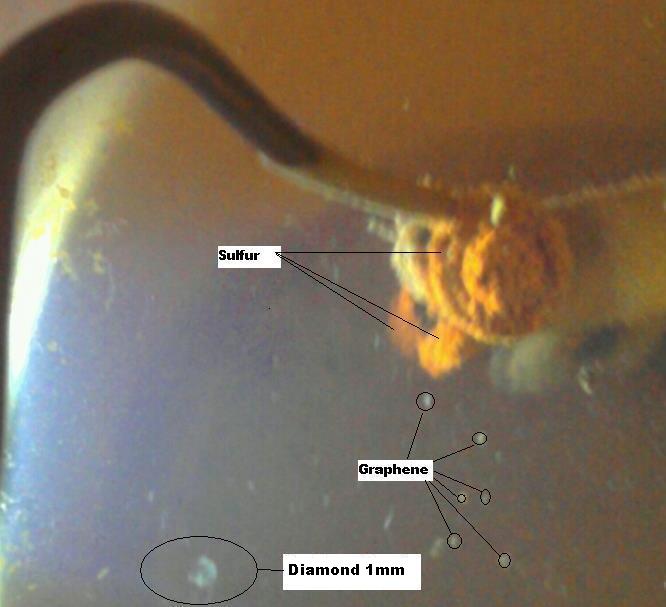
Sulfur and Graphene

1.2 mm Graphene under light

II- Definitions

1- Sulfur or sulphur: is the chemical element with atomic number 16. In the periodic table it is represented by the symbol S. It is an abundant, multivalent non-metal. Under normal conditions, sulfur atoms form cyclic octatomic molecules with chemical formula S8. Elemental sulfur is a bright yellow crystalline solid when at room temperature. Chemically, sulfur can react as either an oxidant or reducing agent. It oxidizes most metals and several non-metals, including carbon, which leads to its negative charge in most organ sulfure compounds, but it reduces several strong oxidants, such as oxygen and fluorine. It is also the lightest element to easily produce stable exceptions to the octet rule.(a)

2- Barley: is a member of the grass family. It is a self-pollinating, diploid species with 14 chromosomes. The wild ancestor of domesticated barley, Hordeum vulgare subsp. spontaneum, is abundant in grasslands and woodlands throughout the Fertile Crescent and is abundant in disturbed habitats, roadsides and orchards. Outside this region, the wild barley is less common and is usually found in disturbed habitats. (a)
Barley is within the definitions; in order to show how close is to the Sulfur's electrons by the number of its chromosomes.

3- Substrate analogs: (substrate state analogues), are chemical compounds with a chemical structure that resemble the substrate molecule in an enzyme-catalysed chemical reaction.(a)

4-Electrostatic catalysis: Systematic computer simulation studies established that electrostatic effects give, by far, the largest contribution to catalysis. In particular, it has been found that enzyme provides an environment which is more polar than water, and that the ionic transition states are stabilized by fixed dipoles. This is very different from transition state stabilization in water, where the water molecules must pay with "reorganization energy". in order to stabilize ionic and charged states. Thus, the catalysis is associated with the fact that the enzyme polar groups are preorganized. (a)

5- In biochemistry, a substrate is a molecule upon which an enzyme acts. Enzymes catalyse chemical reactions involving the substrate(s). In the case of a single substrate, the substrate binds with the enzyme active site, and an enzyme-substrates complex is formed. The substrate is transformed into one or more products, which are then released from the active site. The active site is now free to accept another substrate molecule. In the case of more than one substrate, these may bind in a particular order to the active site, before reacting together to produce products. (a)


6- Enzyme catalysis: is the catalysis of chemical reaction by specialized proteins known as enzymes. Catalysis of biochemical reactions in the cell is vital due to the very low reaction rates of the uncatalysed reactions.
The mechanism of enzyme catalysis is similar in principle to other types of chemical catalyst. By providing an alternative reaction route and by stabilizing intermediates the enzyme reduces the energy required to reach the highest energy transition state of the reaction. The reduction of activation energy (Ea) increases the number of reactant molecules with enough energy to reach the activation energy and form the product. (a)

7- In organic chemistry a hydrocarbon is an organic compound consisting entirely of hydrogen and carbon. Hydrocarbons from which one hydrogen atom has been removed are functions, called hydrocarbyls. 
Aromatic hydrocarbons (arenes), alkanes, cycloalkanes and alkyne-based compounds are different types of hydrocarbons.
The majority of hydrocarbons found naturally occur in crude oil, where decomposed organic matter provides an abundance of carbon and hydrogen which, when bonded, can catenate to form seemingly limitless chains. (a)

8- Catenation: is the linkage of atoms of the same element into longer chains. Catenation occurs most readily in carbon, which forms covalent bonds with other carbon atoms to form longer chains and structures. This is the reason for the presence of the vast number of organic compounds in nature. Carbon is most well known for its properties of catenation, with organic chemistry essentially being the study of catenated carbon structures (otherwise known as catenae). However, carbon is by no means the only element capable of forming such catenae, and several other main group elements are capable of forming an expansive range of catenae, including silicon and sulfur.
The ability of an element to catenate is primarily based on the bond energy of the element to itself, which decreases with more diffuse orbitals (those with higher azimuthal quantum number) overlapping to form the bond. Hence, carbon, with the least diffuse valence shell p orbital is capable of forming longer p-p sigma bonded chains of atoms than heavier elements which bond via higher valence shell orbitals. Catenation ability is also influenced by a range of steric and electronic factors, including the electronegativity of the element in question, the molecular orbital hybridization and the ability to form different kinds of covalent bonds. For carbon, the sigma overlap between adjacent atoms is sufficiently strong that perfectly stable chains can be formed. With other elements this was once thought to be extremely difficult in spite of plenty of evidence to the contrary.
The versatile chemistry of elemental sulfur is largely due to catenation. In the native state, sulfur exists as S8 molecules. On heating these rings open and link together giving rise to increasingly long chains, as evidenced by the progressive increase in viscosity as the chains lengthen. Selenium and tellurium also show variants of these structural motifs.(a)

9- Alkanes (also known as paraffins or saturated hydrocarbons) are chemical compounds that consist only of hydrogen and carbon atoms and are bonded exclusively by single bond (i.e., they are saturated compounds) without any cycles (or loops; i.e., cyclic structure). Alkanes belong to a homologous series of organic compounds in which the members differ by a constant relative molecular mass of 14. (a)

10- Homogeneity and heterogeneity: are concepts relating to the uniformity or lack thereof in a substance. A material that is homogeneous is uniform in composition or character; one that is heterogeneous lacks uniformity in one of these qualities.
The concepts are applicable to every level of complexity, from atoms to populations of animals or people, to galaxies. Hence, a substance may be homogeneous on a larger scale, compared to being heterogeneous on a smaller scale within the same substance. This is known as an effective medium approach, or effective medium approximations. (a)

11- Electronegativity, symbol χ, is a chemical property that describes the tendency of an atom or a functional group to attract electrons (or electron density) towards itself.  An atom's electronegativity is affected by both its atomic number and the distance that its valence electrons reside from the charged nucleus. The higher the associated electronegativity number, the more an element or compound attracts electrons towards it. (a)

12- In organic chemistry, electronegativity is associated more with different functional groups than with individual atoms. The terms group electronegativity and substituent electronegativity are used synonymously. However, it is common to distinguish between the inductive effect and the resonance effect, which might be described as σ- and π-electronegativities respectively. There are a number of linear free energy relationships which have been used to quantify these effects, of which the Hammet Equations is the best known. Kabachnik parameters are group electronegativities for use in organophosphorus chemistry. (a)

13- In chemistry, pi bonds (π bonds) are covalent chemical bonds where two lobes of one involved atomic orbital overlap two lobes of the other involved atomic orbital. These orbitals share a nodal plane which passes through both of the involved nuclei.(a)

14- In physical organic chemistry, a free-energy relationship or linear Gibbs energy relation relates the logarithm of a reaction rate constant or equilibrium constant for one series of reactions with the logarithm of the rate or equilibrium constant for a related series of reactions. Establishing free-energy relationships helps in the understanding of the reaction mechanism for a chemical reaction and allows the prediction of reaction rates and equilibrium constants.
The Brønsted catalysis equation describes the relationship between the ionization constant of a series of catalysts and the reaction rate constant for a reaction on which the catalyst operates. The Hammett Equation predicts the equilibrium constant or reaction rate of a reaction from a substituent constant and a reaction type constant. The Edwards Equation relates the nucleophilic power to polarisability and basicity.
It has been suggested that this name should be replaced by linear Gibbs energy relation, but at present there is little sign of acceptance of this change. The area of physical organic chemistry which deals with such relations is commonly referred to as 'Linear Free-Energy Relationships'.
For example, a typical LFER relation for predicting solubility can be defined as follows:
log SP = eE + sS +aA + bB + lL +c

where SP is some free energy related property, such as an adsorption or absorption constant. The lower case letters (e, s, a, b, l) are system constants describing the contribution of the aerosol phase to the sorption process. The capital letters are solute descriptors representing the complementary properties of the compounds. Specifically, L is the gas-liquid partition constant on hexadecane at 298 K; E the excess molar refraction; S the ability of a solute to stabilize a neighbouring dipole by virtue of its capacity for orientation and induction interactions; A the solute’s effective hydrogen bond acidity; and B the solute’s effective hydrogen-bond basicity. The complementary system constants are identified as the contribution from cavity formation and dispersion interactions, l, the contribution from interactions with solute n- or Pi electrons, e, the contribution from dipole-type interactions, s, the contribution from hydrogen-bond basicity (because a basic sorbent will interact with an acidic solute), a, and b the contribution from hydrogen-bond acidity to the transfer of the solute from air to the aerosol phase. (a)


15- Magnetic catalysis: is a phenomenon in quantum field theory which explains a spontaneous breaking of flavor or chiral symmetry, triggered by the presence of an external magnetic field.
General description
The underlying mechanism behind the magnetic catalysis is the dimensional reduction of the low-energy charged spin 1/2 particles and, as a result of such reduction, a strong enhancement of the particle-antiparticle pairing responsible for symmetry breaking. For gauge theories in 3+1 dimensions, such as quantum electrodynamics and quantum chromodynamics, the dimensional reduction leads to an effective (1+1)-dimensional low-energy dynamics as if the space-time were (1+1)-dimensional. (Here the dimensionality of space-time is written as D+1, where D stands for the number of space-like directions and 1 stands for a single time-like direction.) In simple terms, the dimensional reduction reflects the fact that the motion of charged particles is (partially) restricted in the two space-like directions perperndicular to the magnetic field. However, this orbital motion constraint alone is not sufficient (for example, there is no dimensional reduction for charged scalar particles, carrying spin 0, although their orbital motion is constrained in the same way.) It is also important that fermions have spin 1/2 and, as follows from the Atiyah–Singer index theorem, their lowest Landau level states have an energy independent of the magnetic field. (The corresponding energy vanishes in the case of massless particles.) This is in contrast to the energies in the higher Landau levels, which are proportional to the square root of the magnetic field. Therefore, if the field is sufficiently strong, only the lowest Landau level states are dynamically accessible at low energies. The states in the higher Landau levels decouple and become almost irrelevant. The phenomenon of magnetic catalysis has applications in particle physics, nuclear physics and condensed matter physics. (a)


16- The term chiral describes an object, especially a molecule, which has or produces a non-superimposeable mirror image of itself. In chemistry, such a molecule is called an enantiomer or is said to exhibit chirality or enantiomerism. The term "chiral" comes from the Greek word for the human hand, which itself exhibits such non-superimposeability of the left hand precisely over the right. Due to the opposition of the fingers and thumbs, no matter how the two hands are oriented, it is impossible for both hands to exactly coincide. Helices, chiral characteristics (properties), chiral media, order, and symmetry all relate to the concept of left- and right-handedness.(a)

 17- Electromagnetic wave propagation as handedness is wave polarization and described in terms of helicity (occurs as a helix). Polarization of an electromagnetic wave is the property that describes the orientation, i.e., the time-varying, direction (vector), and amplitude of the electric field vector. 
In the image, it can be seen that polarizations are described in terms of the figures traced as a function of time all along the electric field vector. A representation of the electric field, as a vector, is placed onto a fixed plane in space. The plane is perpendicular to the direction of propagation. (a)


18- Nuclear magnetic resonance (NMR): is a physical phenomenon in which magnetic nuclei in a magnetic field absorb and re-emit electromagnetic radiation. This energy is at a specific resonance frequency which depends on the strength of the magnetic field and the magnetic properties of the isotope of the atoms; in practical applications, the frequency is similar to VHF and UHF television broadcasts (60–1000 MHz). NMR allows the observation of specific quantum mechanical magnetic properties of the atomic nucleus.(a)

19- In physics, resonance is the tendency of a system to oscillate at a greater amplitude at some frequencies than at others. These are known as the system's resonant frequencies (or resonance frequencies). At these frequencies, even small periodic driving forces can produce large amplitude oscillations, because the system stores vibrational energy. (a)

20- Electromagnetic radiation (EM radiation or EMR): is a form of energy emitted and absorbed by charged particles, which exhibits wave-like behavior as it travels through space. EMR has both electric and magnetic field components, which stand in a fixed ratio of intensity to each other, and which oscillate in phase perpendicular to each other and perpendicular to the direction of energy and wave propagation. In vacuum, electromagnetic radiation propagates at a characteristic speed, the speed of light.(a)

21- Oscillation: is the repetitive variation, typically in time, of some measure about a central value (often a point of equilibrium) or between two or more different states. Familiar examples include a swinging pendulum and AC power. The term vibration is sometimes used more narrowly to mean a mechanical oscillation but sometimes is used to be synonymous with "oscillation". Oscillations occur not only in physical systems but also in biological systems and in human society.(a)


22- Alpha decay: My explanation of Helium particles is completely different; Hydrogen is the origin of Helium, as I explained it in the post of "Higgs boson discovered" under alpha decay subtitle.


23- Graphene: is an allotrope of carbon. Its structure is one-atom-thick planar sheets of sp2-bonded carbon atoms that are densely packed in a honeycomb crystal lattice. The term graphene was coined as a combination of graphite and the suffix -ene by Hanns-Peter Boehm, who described single-layer carbon foils in 1962.Graphene is most easily visualized as an atomic-scale chicken wire made of carbon atoms and their bonds. The crystalline or "flake" form of graphite consists of many graphene sheets stacked together. (a)

24- Quantum Hall effect in graphene: the idea of magnetic catalysis can be used to explain the observation of new quantum Hall plateaus in graphene in strong magnetic fields beyond the standard anomalous sequence at filling factors ν=4(n+½) where n is an integer. The additional quantum Hall plateaus develop at ν=0, ν=±1, ν=±3 and ν=±4.
The mechanism of magnetic catalysis in relativistic-like planar systems such as graphene is very natural. In fact, it was originally proposed for a 2+1 dimensional model, which is almost the same as the low-energy effective theory of graphene written in terms of massless Dirac fermions. In application to a single layer of graphite (i.e., graphene), magnetic catalysis triggers the breakdown of an approximate internal symmetry and, thus, lifts the 4-fold degeneracy of Landau levels. (a)


III – Conclusion
              
All definitions above are parts to understand the phenomenon which happening during and after the experiment.The subject is not about defining words or expressions. So copying and pasting is a way of sharing information to give better vision to our subject. A double check to this experiment by a laboratory is important to confirm that the production of Sulfur, Diesel, Helium, Graphene, and Electricity is possible by elevating rugosa corals. I do believe that through this experiment, I am bringing sustainable elements which are important to the economies in the world.


(a) Wikipedia

Wednesday, 6 June 2012

Wheat and Plutonium

As I promised in "Apple and Plutonium" post; to make a deep vision about the calculation of the half-life of Plutonium 260 and Plutonium 274. The prediction of the half life of the plutonium (Pu260 and Pu274) is based on a comparison with wheat chromosomes.

I- Definitions
  
1- Wheat is a cereal grain, originally from the Levant region of the Near East and Ethiopian Highlands, but now is cultivated worldwide. Wheat is grown on more land area than any other commercial crop and is the most important staple food for humans. 
Recent findings narrow the first domestication of wheat down to a small region of southeastern Turkey, and domesticated Einkorn wheat at Nevalı Çori—40 miles (64 km) northwest of Gobekli Tepe in Turkey—has been dated to 9,000 B.C. However evidence for the exploitation of wild barley has been dated to 23,000 B.C. and some say this is also true of pre-domesticated wheat.

1-1 An Ear is the grain-bearing tip part of the stem of a cereal plant, such as wheat or maize. It can also refer to "a prominent lobe in some leaves". The ear is a spike, consisting of a central stem on which grows tightly packed rows of flowers. These develop into fruits containing the edible seeds.


1-2 A stalk is the stem or main axis of a plant; as, a stalk of wheat, rye, or oats; the stalks of maize or hemp.


 2- Wheat genetics is more complicated than that of most other domesticated species. Some wheat species are:

2-1 Diploid Cells of the diploid wheats each contain 2 complements of 7 chromosomes, one from the mother and one from the father (2n=14, where 2n is the number of chromosomes in each somatic cell, and x is the basic chromosome number).

2-2 Tetraploid: Most tetraploid wheats are derived from wild emmer. Wild emmer is itself the result of a hybridization between two diploid wild grasses. The hybridization that formed wild emmer (AABB) occurred in the wild, long before domestication, and was driven by natural selection. (4 sets of chromosomes, 4n=28).

2-3 Hexaploid: wheats evolved in farmers' fields. Either domesticated emmer or durum wheat hybridized with yet another wild diploid grass to make the hexaploid wheats, spelt wheat and bread wheat. These have three sets of paired chromosomes, three times as many as in diploid wheat.  (6 sets of chromosomes, 6n=42).                                      


3- Wheat Lodging occurs when an ear stalk falls over in the wind and rots on the ground, and heavy nitrogenous fertilization of wheat makes the grass grow taller and become more susceptible to this problem.

4- Areosol: Technically, an aerosol is a colloid suspensionn of fine solid particles or liquid droplets in a gas. The word aerosol derives from the fact that matter "floating" in air is a suspension (a mixture in which solid or liquid or combined solid–liquid particles are suspended in a fluid). Earth's atmosphere contains aerosols of various types and concentrations, including quantities of: natural inorganic materials: dust, smoke, sea salt, water droplets. Natural organic materials: pollen, spores, bacteria. anthropogenic products of combustion such as: smoke, ashes oder dusts.

5- In the field of physics, the study of the causes of motion and changes in motion is dynamics. In other words the study of forces and why objects are in motion. Dynamics includes the study of the effect of torques on motion. These are in contrast to kinematics, the branch of classical mechanics that describes the motion of objects without consideration of the causes leading to the motion.

5-1 Anti-dynamics: my definition to anti-dynamics is the opposite stream direction of Dynamics.

6- Merger: In the pure sense of the term, a merger happens when two firms agree to go forward as a single new company rather than remain separately owned and operated. This kind of action is more precisely referred to as a "merger of equals". The firms are often of about the same size. Both companies' stocks are surrendered and new company stock is issued in its place.


7- Vertical Integration: Vertical integration occurs when an upstream and downstream firm merge (or one acquires the other). There are several reasons for this to occur. One reason is to internalise an externality problem. A common example of such an externality is double marginalization. Double marginalization occurs when both the upstream and downstream firms have monopoly power and each firm reduces output from the competitive level to the monopoly level, creating two deadweight losses. Following a merger, the vertically integrated firm can collect one deadweight loss by setting the downstream firm's output to the competitive level. This increases profits and consumer surplus. A merger that creates a vertically integrated firm can be profitable.


8- Classical Conditioning: A process of behavior modification in which a subject learns to respond in a desired manner such that a neutral stimulus (the conditioned stimulus) is repeatedly presented in association with a stimulus (the unconditioned stimulus) that elicits a natural response (the unconditioned response) until the neutral stimulus alone elicits the same response (now called the conditioned response).


9- Heterogeneous catalysts: act in a different phase than the reactants. Most heterogeneous catalysts are solids that act on substrates in aliquid or gaseous reaction mixture. Diverse mechanisms for reactions on surfaces are known, depending on how the adsorption takes place (Langmuir-Hinshelwood, Eley-Rideal, and Mars-van Krevelen).The total surface area of solid has an important effect on the reaction rate.The smaller the catalyst particle size, the larger the surface area for a given mass of particles.

10-Recreation is an activity of leisure, leisure being discretionary time. The "need to do something for recreation" is an essential element of human biology and psychology, in our concept is diversion.

11- Poisoning: In the context of biology, poisons are substances that cause disturbances to organisms, usually by chemical reaction or other activity on the molecular scale, when a sufficient quantity is absorbed by an organism.

12- Etymology: is the study of the history of words, their origins, and how their form and meaning have changed over time. By an extension, the term "etymology (of a word)" means the origin of a particular word.

13-Wheat Taxonomy: Carl Linnaeus recognised five species, all domesticated:
T. aestivum Bearded spring wheat
T. hybernum Beardless winter wheat
T. turgidum Rivet wheat
T. spelta Spelt wheat
T. monococcum Einkorn wheat
The development of a modern classification depended on the discovery, in the 1920s, that wheat was divided into 3 ploidy levels.

14- In genetics and biochemistry, Sequencing means to determine the primary structure (sometimes falsely called primary sequence) of an unbranched biopolymer. Sequencing results in a symbolic linear depiction known as a sequence which succinctly summarizes much of the atomic-level structure of the sequenced molecule.

15- Nuclear magnetic resonance (NMR) is a physical phenomenon in which magnetic nuclei in a magnetic field absorb and re-emit electromagnetic radiation. This energy is at a specific resonance frequency which depends on the strength of the magnetic field and the magnetic properties of the isotope of the atoms; in practical applications, the frequency is similar to VHF and UHF television broadcasts (60–1000 MHz). NMR allows the observation of specific quantum mechanical magnetic properties of the atomic nucleus.

16- Nuclear magnetic resonance spectroscopy, most commonly known as NMR spectroscopy, is a research technique that exploits the magnetic properties of certain atomic nuclei to determine physical and chemical properties of atoms or the molecules in which they are contained. It relies on the phenomenon of nuclear magnetic resonance and can provide detailed information about the structure, dynamics, reaction state, and chemical environment of molecules.

17- Putonium Paramagnetism is a form of magnetism whereby the paramagnetic material is only attracted when in the presence of an externally applied magnetic field. In contrast with this behavior, diamagnetic materials are repelled by magnetic fields. Paramagnetic materials have a relative magnetic permeability greater or equal to unity (i.e., a positive magnetic susceptibility) and hence are attracted to magnetic fields. The magnetic moment induced by the applied field is linear in the field strength and rather weak. It typically requires a sensitive analytical balance to detect the effect and modern measurements on paramagnetic materials are often conducted with a SQUIDmagnetometer.

18- The magnetic moment of a magnet is a quantity that determines the force that the magnet can exert on electric currents and the torque that a magnetic field will exert on it. A loop of electric current, a bar magnet, an electron, a molecule, and a planet all have magnetic moments.
Both the magnetic moment and magnetic field may be considered to be vectors having a magnitude and direction. The direction of the magnetic moment points from the south to north pole of a magnet. The magnetic field produced by a magnet is proportional to its magnetic moment as well. More precisely, the term magnetic moment normally refers to a system's magnetic dipole moment, which produces the first term in the multipol expansion of a general magnetic field. The dipole component of an object's magnetic field is symmetric about the direction of its magnetic dipole moment, and decreases as the inverse cube of the distance from the object

19- Chemical Shift: A spinning charge generates a magnetic field that results in a magnetic moment proportional to the spin. In the presence of an external magnetic field, two spin states exist (for a spin 1/2 nucleus): one spin up and one spin down, where one aligns with the magnetic field and the other opposes it. The difference in energy (ΔE) between the two spin states increases as the strength of the field increases, but this difference is usually very small, leading to the requirement for strong NMR magnets (1-20 T for modern NMR instruments). Irradiation of the sample with energy corresponding to the exact spin state separation of a specific set of nuclei will cause excitation of those set of nuclei in the lower energy state to the higher energy state.
For spin 1/2 nuclei, the energy difference between the two spin states at a given magnetic field strength are proportional to their magnetic moments. However, even if all protons have the same magnetic moments, they do not give resonant signals at the same field/frequency values. This is because this dependent on the electrons surrounding the proton in covalent compounds. Upon application of an external magnetic field, these electrons move in response to the field and generate local magnetic fields that oppose the much stronger applied field. This local field thus "shields" the proton from the applied magnetic field, which must therefore be increased in order to achieve resonance (absorption of rf energy). Such increments are very small, usually in parts per million (ppm). The difference between 2.3487T and 2.3488T is therefore about 42ppm. However a frequency scale is commonly used to designate the NMR signals, even though the spectrometer may operate by sweeping the magnetic field, and thus the 42 ppm is 4200 Hz for a 100 MHz reference frequency (rf).

II- Conclusion:


The half-life time of Plutonium 260 is calculated as follow:
7+7+7=21
21=21=42
42-1=41 therefore half-life of Pu-260 is between 41 and 40 million years.

The half-life time of Plutonium 274 is calculated as follow:
7+7+7=21
21+21=42
42+42=84
84-1= 83 therefore half-life time of Pu-274 is between 83 and 82 million years.

Note 1
This post is about The calculation of Half-life time of Plutonium.
But many readers would like to know what is the relation between Wheat and Plutonium at first place.

Wheat chromosomes also have the same number of Plutonium protons which is 94
and is calculated as follow:
7+7=14
14+1=15
15+(7+7)=29
29+1=30
30+(7+7)=44
44+1=45
45+1=46
46+46=92
92+1=93
93+1=94
Please check covalent bonding.

Apple chromosomes have the same number of Plutonium protons which is 94 
Please check archive "Higgs boson manifesto", "Apple and Plutonium", "Bio Barium production" 

Note 2
The cited Definitions above are from Wikipedia, except Anti-Dynamism.


Monday, 4 June 2012

Apple and Plutonium

The importance of this post is to make a comparative analysis of Plutonium 260 and Plutonium 274 with Apple.  The half-life time of Pu-260 and Pu-274 will be discussed in future posts.

Definitions

1- Apple is the pomaceous fruit of the apple tree, species Malus domestica in the rose family (Rosaceae). It is one of the most widely cultivatedtree fruits, and the most erwidely known of the many members of genus Malus that are used by humans. Apples grow on small, deciduous trees.

2- The fruit matures in autumn, and is typically 5 to 9 centimetres (2.0 to 3.5 in) in diameter. The center of the fruit contains five carpels arranged in a five-point star, each carpel containing one to three seeds, called pips.


Five leaves and an apple


3- The term gynoecium is useful because it refers to the ovule producing structure in a flower, whether it is a single carpel, multiple unfused carpels or fused carpels.

 4- A carpel is the ovule and seed producing reproductive organ in flowering plants. 

5- In plants, the term locule usually refers to a chamber within an ovary (gynoecium or carpel of the flower and fruits). Depending on the number of locules in the ovary, carpels and fruits can be classified as uni-locular, bi-locular or multi-locular. The locules contain the ovules or seeds. The term may also refer to chambers within anthers containing pollen.

6- Pollen is a fine to coarse powder containing the microgametophytes of seed plants, which produce the male gametes (sperm cells).

7- Ovule means "small egg". In seed plants, the ovule is the structure that gives rise to and contains the female reproductive cells. 


8-Gamate in Plants which reproduce sexually also have gametes, however, they are produced in the anther  and ovary . They produce pollen  and ovules by meiosis, in a similar way to animals.


9- Haploid number (n) is the number of chromosomes in a gamete of an individual. This is distinct from the monoploid number (x), which is the number of unique chromosomes in a single complete set. Gametes (sperm, and ova) are haploid cells. The haploid gametes produced by (most) diploid organisms are monoploid, and these can combine to form a diploid zygote. For example, most animals are diploid and produce monoploid gametes.

 9-1 Zygote is the initial cell formed when two gamete cells are joined by means of sexual reproduction. In multi-cellular organisms, it is the earliest developmental stage of the embryo. In single-celled organisms, the zygote divides to produce offspring, usually through meiosis.


10- Ploidy is the number of sets of chromosomes in a biological cell.

11- Humans are diploid ; A human somatic cell contains 46 chromosomes: 2 complete haploid sets, which make up 23 homologous chromosome pairs. However, many organisms have more than two sets of homologous chromosomes and are called polyploid.

12- Most plants and animals are diploid organisms. Their chromosomes come in pairs; each chromosome in a diploid organism has exactly one homologous partner. Each chromosome from these pairs is inherited from a different parent (presuming the organism reproduces sexually from two parents). In fact the chromosomes physically arrange themselves into homologous pairs during meiosis, and divide into monoploid (i.e., haploid) sets when forming gametes.

Note: An apple has 5 carpels with 23 homologous chromosome pairs in each.


13- Plutonium Necleus: Pu-238 has 144 neutrons and 94 protons. The question is where these numbers of neutrons and protons come from? Ok my explanation to the exponential of the cluster of the Pu-238 is as follow:

(23+23) = 46
46 + (23+23+1) = 93+1 =94
94+ (23+23+1) = 141+1 =142
142+ (23+23+1) = 189+1 =190
190+ (23+23+1) = 237+1 =238

Just say that 94 is the number of protons of the first two additions, and the total of the last three additions is 144 which is the number of neutrons. My question is why two to make 94 and three to make 144?

We go back to definitions

14- Lotus is a genus that includes bird's-foot, trefoils and deer vetches and contains many dozens of species distributed world-wide. Depending on the taxonomic authority, roughly between 70 and 150 are accepted. Lotus is a genus of legume and its members are adapted to a wide range of habitats, from coastal environments to high altitudes. Most species have leaves with five leaflets; two of these are at the extreme base of the leaf, with the other three at the tip of a naked midrib. This gives the appearance of a pair of large stipules below a "petiole" bearing a trefoil of three leaflets – in fact the true stipules are minute, soon falling or withering. Some species have pinnate leaves with up to 15 leaflets. The flowers are in clusters of 3-10 together at the apex of a stem with some basal leafy bracts; they are pea-flower shaped, usually vivid yellow, but occasionally orange or red. The seeds develop in three or four straight, strongly diverging pods, which together make a shape reminiscent of the diverging toes of a small bird, leading to the common name "bird's-foot".

1- Five leaflets: this is equal to 5 apple capsule means the addition goes from step 1 to step 5
2- Two leaflet are at the extreme base of the leaf the first two steps with a total 94 Plutonium protons.

14-1 Basal: leaf that grows at the base of an herbaceous plant, often different in size and shape from leaves that grow on the upright flowering

3- The other three leaflet at the tip of a naked midrib; from the 3rd step to the 5th step with a total of 144 neutrons.

14-2 Apical: is the Inhibition of the growth of lateral buds by the terminal bud of a plant shoot. Correlative inhibition of the growth of lateral (auxiliary); shoots exerted by the growing apical bud of the plant stem.The flowers are in clusters of 3-10 together at the apex of a stem with some basal leafy bracts.

Apple leaf and Human hand are very similar


15- Cluster: In physics, the term clusters denotes small, multiatom particles. As a rule of thumb, any particle of somewhere between 3 and 3x10⁷ atoms is considered a cluster.
In chemistry , a cluster is an ensemble of bound atoms  intermediate in size between a molecule and a bulk solid . Clusters exist of diverse stoichiometries and nuclearities.
The term can also refer to the organization of protons and neutrons within an atomic nucleus.


16- Colloid: A colloid is a substance microscopically dispersed evenly throughout another substance.


16-1 A colloidal system consists of two separate phases: a dispersed phase (or internal phase) and a continuous phase (or dispersion medium) in which the colloid is dispersed. A colloidal system may be solid, liquid, or gas.

17- The stability of a colloidal system is the capability of the system to remain as it is; that explain in the apple extreme base of the leaf the two stable and in Pu-238 and its isotopes the 94 protons are stable.

18- Avogadro constant: 6.02214078(18)×1023 mol. In chemistry  and physics , the Avogadro constant (symbols: L, NA) is defined as the ratio of the number of constituent particles N (usually atoms  or molecules ) in a sample to the amount of substance n (unit mole ) through the relationship NA = N/n. Thus, it is the proportionality factor that relates the molar mass of an entity, i.e., the mass per amount of substance , to the mass of said entity. The Avogadro constant expresses the number of elementary entities per mole of substance.

19- Correlation: The correlation coefficient tells us that a relationship exists. The + or - sign indicates the direction of the relationship while the number indicates the magnitude of the relationship. This relationship should not be interpreted as a causal relationship. Variable X is related to variable Y, and may indeed be a good predictor of variable Y, but variable X does not cause variable Y although this is sometimes assumed.

Once we look at Plutonium isotopes from Pu-238 to Pu-244 they are as follow:
Pu-238 neutrons are 144, Pu-239 neutrons are 145, Pu-240 neutrons are 146, Pu-241 neutrons are 147, Pu-242 neutrons are 148… these series are conformable to
Avogadro constant correlation coefficient = 1

The question is what is the number of neutrons Pu-260 and Pu-274? 
In the Lotus genus Pinnate leaves with up to 15 leaflets; means that there is an existence of irregularity.
By adding 1 to Plutonium isotopes and 1 to plutonium neutrons starting from Pu-243 the number of its neutrons 149 and this by adding 1 to the number of neutrons of Pu-242, each time we can increase both sides by 1 up to Pu-260 which has 166 neutrons, and Pu-274 has 180 neutrons.?
We know also from my comments in Bio barium production post; how it is possible to raise the number of electrons in Pu-260 and Pu274.

 “By definition that rugosa corals (Higgs Boson) has: Addition polymer: is a polymer which is formed by an addition reaction, where many monomers bond together via rearrangement of bonds without the loss of any atom or molecule. Electronic structure of Plutonium, The anomalous behavior of Plutonium is caused by its electronic structure. The energy difference between the 6d and 5f sub-shells is very low. The size of the 5f shell is just enough to allow the electrons to form bonds within the lattice, on the very boundary between localized and bonding behavior. The proximity of energy levels leads to multiple low-energy electron configurations with near equal energy levels. This leads to competing 5fn7s2 and 5fn-17s26d1 configurations, which causes the complexity of its chemical behavior. The highly directional nature of 5f orbitals is responsible for directional covalent bonds in molecules and complexes of plutonium.  Now if we look at the 5th orbital of the Pu-242 we find that it has 16 electrons and the 7th orbital has 6 electrons. By addition reaction at the 5th orbital: (16+16 +1) + (32+32+1) + (64+64+1)+ (128+128+1) = 260 electrons; that is Pu 260 By addition reaction at the 7th orbital of Pu-260: (6+6+1) = 13 by adding 1 electron due valence bond theory, the shell orbital is equal to 14, means that Higgs boson is able to produce Pu-274.
My question is why Pu-260 is increased by 18 neutrons and Pu-274 is increased by 32 neutrons?

20- Relativistic quantum chemistry invokes quantum chemical and relativistic mechanical arguments to explain elemental properties and structure, especially for heavy elements of the periodic table.
The term "relativistic effects" was developed in light of the history of quantum mechanics. Initially quantum mechanics was developed without considering the theory of relativity. By convention, "relativistic effects" are those discrepancies between values calculated by models considering and not considering relativity. "Heavy elements" in this context refers to high atomic number elements in the later part of the periodic table where relativistic effects are important.
Relativistic effects in chemistry can be considered to be perturbations, or small corrections, to the non-relativistic theory of chemistry, which is developed from the solutions of the Schrödinger equation. These corrections have differential effects on the electrons in various atomic orbitals within the atom, according to the speed of these electrons relative to the speed of light. Relativistic effects are more prominent in heavy elements, because only in these elements do electrons attain relativistic speeds.

21- Density of being nearer to the nucleus: A nucleus with a large charge will cause an electron to have a high velocity. A higher electron velocity means an increased electron relativistic mass, as a result the electrons will be near the nucleus more of the time and thereby contract the radius for small principal quantum numbers.

22- Emission line is formed when an electron makes a transition from a particular discrete energy level E2 of an atom, to a lower energy level E1, emitting a photon of a particular energy and wavelength. A spectrum of many such photons will show an emission spike at the wavelength associated with these photons.

23-  Emission spectrum of a chemical element  or chemical compound  is the spectrum of frequencies  of electromagnetic radiation  emitted by the element's atoms or the compound's molecules when they are returned to a lower energy state.

Gamma Rays

24- In physics, emission is the process by which a higher energy quantum mechanical state of a particle becomes converted to a lower one through the emission of a photon, resulting in the production of light . The frequency of light emitted is a function of the energy of the transition. Since energy must be conserved, the energy difference between the two states equals the energy carried off by the photon. The energy states of the transitions can lead to emissions over a very large range of frequencies. For example, visible light  is emitted by the coupling of electronic states in atoms and molecules (then the phenomenon is called fluorescence  or phosphorescence ). On the other hand, nuclear shell transitions can emit high energy gamma rays, while nuclear spin transitions emit low energy radio waves.

25- Absorption line is formed when an electron makes a transition from a lower, E1, to a higher discrete energy state, E2, with a photon being absorbed in the process. These absorbed photons generally come from background continuum radiation and a spectrum will show a drop in the continuum radiation at the wavelength associated with the absorbed photons.

26- Oscillation is the repetitive variation, typically in time, of some measure about a central value (often a point of equilibrium) or between two or more different states.  Oscillations occur not only in physical systems but also in biological systems and in human society.

27- The quantum harmonic oscillator is the quantum-mechanical analog of the classical harmonic oscillator. Because an arbitrary potential can be approximated as a harmonic potential at the vicinity of a stable equilibrium point, it is one of the most important model systems in quantum mechanics. Furthermore, it is one of the few quantum-mechanical systems for which an exact, analytical solution is known.


28- Driven harmonic oscillators: are damped oscillators further affected by an externally applied force F(t)


29- Fano resonance is a type of resonant scattering phenomenon that gives rise to an asymmetric line-shape. Interference between a background and a resonant scattering process produces the asymmetric line-shape.


30- In chemistry, pi bonds (π bonds) are covalent chemical bonds where two lobes of one involved atomic orbital overlap two lobes of the other involved atomic orbital. These orbitals share a nodal plane which passes through both of the involved nuclei.


31- Graphene is an allotrope of carbon. Its structure is one-atom-thick planar sheets of sp2-bonded  carbon atoms that are densely packed in a honeycomb crystal lattice. Graphene is a good example of existing dispersed electrons and holes at low energy.

From the above definition that Plutonium electrons are the cause of the appearance of Plutonium protons starting from P-242 which has 148 protons, the election of a proton is made first by the electrons of the fourth orbital which their number is 32 in a parallel position, means Pu-242 become Pu-274, from the third orbital of Pu-242 the 18 electrons elect 18 protons to take parallel position to them, that will be the result of Pu-260. The 8 electrons of the second orbital of the PU-242 elect 8 protons to take a parallel position the result of that is Pu-250.

Gravity

32- Gravitational radiation: whenever two masses orbit each other, the combined effect of the space-time curvature of the moving objects produces gravitational waves which carry away orbital energy. For small masses this effect is negligible, but for very massive objects like black holes and neutron stars the energy carried away can be rapid enough to cause their orbits to spiral in on each other, eventually merging the two masses.

Conclusion

A Bio-production of Plutonium 260 and 274 is possible as long as we have Higgs boson. My explanation above is a good opportunity to develop new concepts in biochemistry. I would like to see Rugosa corals providing the world of botany with expensive information. I recognize that I failed to convince more than 14000 visitors to my blog to co-operate in order to bring more knowledge to the world. Finally, I apply to the appropriate people to accept further researches on my Rugosa corals.